
Fire Alarm Maintenance Checklist for Houston Facility Managers
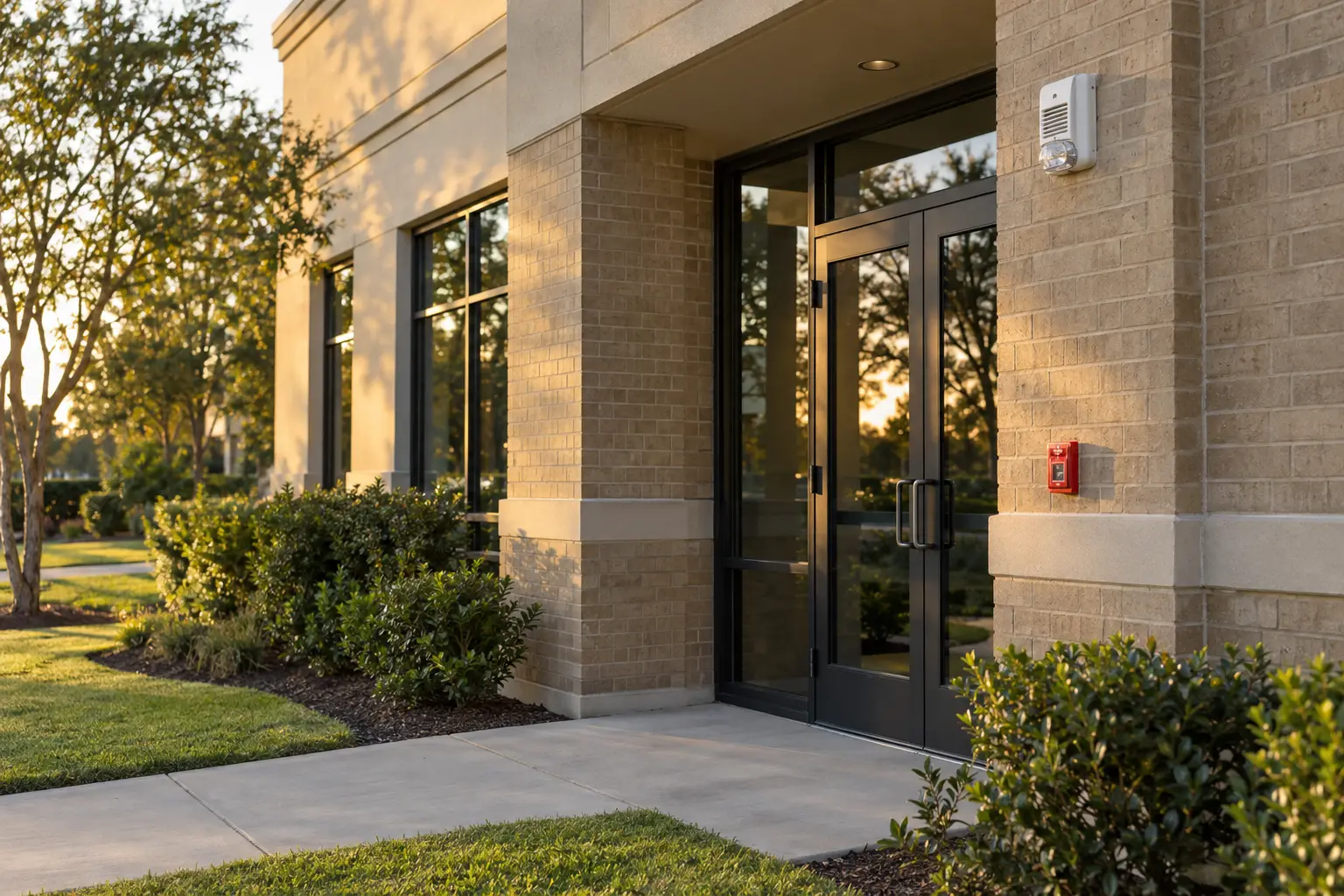
TL;DR: A fire alarm maintenance checklist for Houston facility managers covers five things: keep records, watch the panel, keep devices clear, book the annual test with a licensed fire alarm company, and close every deficiency in writing. NFPA 72 makes the building owner or their representative responsible for inspection, testing and maintenance. Houston’s fire code requires a licensed fire alarm service company to test the system and tag the main panel.
A fire alarm maintenance checklist for Houston facility managers has five parts: keep records, watch the panel, keep devices clear, book the annual test with a licensed company, and close every deficiency in writing. NFPA 72 puts this duty on the building owner or their representative, even when a contractor does the testing.
This guide covers what you track between inspections, so test day goes smoothly. It is written for managers of offices, medical buildings, apartment communities and retail sites in Houston, Pearland and Richmond.
Who is responsible for fire alarm maintenance in a Houston building?
The owner is responsible, or whoever the owner names as their representative. According to the NFPA Journal’s guide to fire alarm roles, NFPA 72 lets owners hand the work to qualified service personnel. Still, the owner stays responsible for keeping the system reliable. That also covers any changes or additions to the system.
In Houston, the Fire Department’s Life Safety Bureau Standard 02 requires a licensed fire alarm service company to test the system. The system must also be service tagged at the main alarm panel. In Texas, fire alarm companies are registered and licensed through the State Fire Marshal’s Office at the Texas Department of Insurance. Your job is to run the program. The licensed technician does the hands-on work.
Fire alarm maintenance checklist: 8 steps to follow
What you need first
- Your most recent annual inspection report and any open deficiency list
- The record of completion or as-built drawings, if you have them
- Your monitoring account details and the name of your central station
- Your current service contract
- Keys or access plans for every room, closet, roof and tenant space
- Contact info for tenants, residents or department heads
- Build a fire alarm binder. Put your reports, deficiency lists and repair records in one place. Keep a copy near the panel and a digital copy off-site. Houston’s standard says records must be kept and shown to the Fire Marshal on request.
- Confirm your contract covers the whole system. That means every device, including those inside tenant spaces, plus the monitoring communicator. Houston also requires fans and dampers tied to the fire alarm to be tested yearly along with the fire alarm, with results included in the report.
- Look at the panel on every walk-through. A normal screen is what you want. If it shows a trouble or supervisory message, write down the date, time and message, then call your fire alarm company. Do not silence it and move on.
- Keep devices clear and untouched. Pull stations should never be blocked by furniture, carts or displays. Detectors should not be covered, painted or moved during make-ready or remodel work.
- Check the monitoring path. Copper phone lines are being retired across Houston. When that line goes dead, older panels show ‘Comm Fail’ and stop reporting to the monitoring center. Our POTS line shutdown and fire alarm monitoring page explains the fix.
- Schedule the annual inspection and testing early. Put the tag date on your calendar and book 60 days ahead. That leaves time to fix anything the test turns up.
- Prepare the building for test day. Notify tenants and staff, since horns and strobes will go off. Set up access to every unit and locked room. Your technician will place the account on test with the monitoring center.
- Close deficiencies in writing. A test report with open items is not a finished job. Approve repairs, then file the updated report showing each item fixed.
Which tasks are yours and which belong to a licensed technician?
You watch, log and report. A licensed fire alarm company tests, repairs and certifies. Here is how the work splits.
| Task | Who handles it | How often | What to keep on file |
|---|---|---|---|
| Panel status check | Facility staff (look and report only) | Every walk-through | Log of date, message and who you called |
| Keeping devices clear | Facility staff and tenants | Ongoing | Notes on remodels and who was notified |
| Inspection, testing and panel tag | Licensed fire alarm company | Annually | Signed report and current tag |
| Repairs and device replacement | Licensed fire alarm company | When found | Work order and updated report |
| Monitoring signals | Fire alarm company and central station | Ongoing, confirmed at each test | Account info and signal test records |
What signs mean you should call a fire alarm technician now?
Call when the system tells you something is wrong or when the building changes. Do not wait for the annual visit.
- A trouble or supervisory message that will not clear
- Comm Fail on the panel display
- Repeat false alarms from the same detector or zone
- Damaged, painted, loose or missing detectors, horns or strobes
- A panel tag that is missing or past due
- A remodel, tenant build-out or roof leak near devices
- A long power outage, such as after a Gulf Coast storm, when the panel has been running on batteries
What common mistakes cause failed inspections?
Most failed inspections come from gaps in paperwork and access, not from the panel itself.
- Treating the tag as the finish line. The inspector reads the deficiency list too.
- Skipping locked rooms and occupied units. Devices nobody tested count as untested.
- Riding the old phone line. A dead copper line means no signal reaches the monitoring center when seconds count.
- Losing records in a turnover. When a property sells or a manager leaves, reports often disappear. Keep the binder with the building.
- Assuming the tenant handles it. NFPA 72 places responsibility on the owner or their representative, not the tenant.
Why Houston managers work with Spartan Fire Protection
Spartan Fire Protection is a licensed Kidde dealer, locally based in Houston.
Our fire alarm work is done to NFPA 72 and the local fire marshal’s requirements.
We perform annual inspections for apartment and commercial properties.
We often take over fire alarm service from other companies.
We help businesses pass fire marshal inspections after another company left deficiencies.
We offer extended system testing when a building needs it.
We install StarLink cellular communicators, and 24/7 monitoring runs through UCC, a UL-listed central station.
We are members of the Houston Apartment Association, Texas Apartment Association and National Apartment Association.
We are highly rated on Google and were named BusinessRate Best of 2025 and Best of 2026 for fire protection service in Houston.
If you are comparing providers, our guide on how to choose a fire alarm company in Houston walks through five checks.
Ready to get your next annual test on the calendar or clear an open deficiency list? Call Spartan Fire Protection at (713) 955-4405 or get a free quote.
Frequently Asked Questions
Can my maintenance staff test the fire alarm system themselves?
No. Houston Fire Department’s Life Safety Bureau standard requires a licensed fire alarm service company to test the system. Your staff can watch the panel, log messages and report problems, but the testing and repairs belong to a licensed technician.
What does the tag on my fire alarm panel mean?
The tag shows that a licensed fire alarm company tested and serviced the system, and when. Houston requires fire alarm systems to be service tagged at the main alarm panel, and inspectors look for a current tag.
What should I do if my fire alarm panel says Comm Fail?
Comm Fail usually means the panel cannot reach the monitoring center. Many Houston buildings see it because copper phone lines are being retired. Write down when it appeared and call your fire alarm company to upgrade to a cellular or radio communicator.
Does a tenant build-out affect my fire alarm system?
It can. New walls, ceilings and room layouts can block, remove or add devices. Under NFPA 72, alterations and additions are the owner’s responsibility, so call your fire alarm company before work starts.
Do Pearland and Richmond follow the same fire alarm rules as Houston?
Each city’s fire marshal is the local authority and enforces its own adopted codes, so details can differ from Houston’s. Ask your fire alarm company to confirm what your local fire marshal expects before your annual test.
Recommended Reads
- How to Choose a Fire Alarm Company in Houston: 5 Key Checks
- POTS Line Shutdown: Fire Alarm Monitoring Houston TX
- Commercial Fire Alarm Systems in Spring Branch Houston